Wire · Gulf Edu
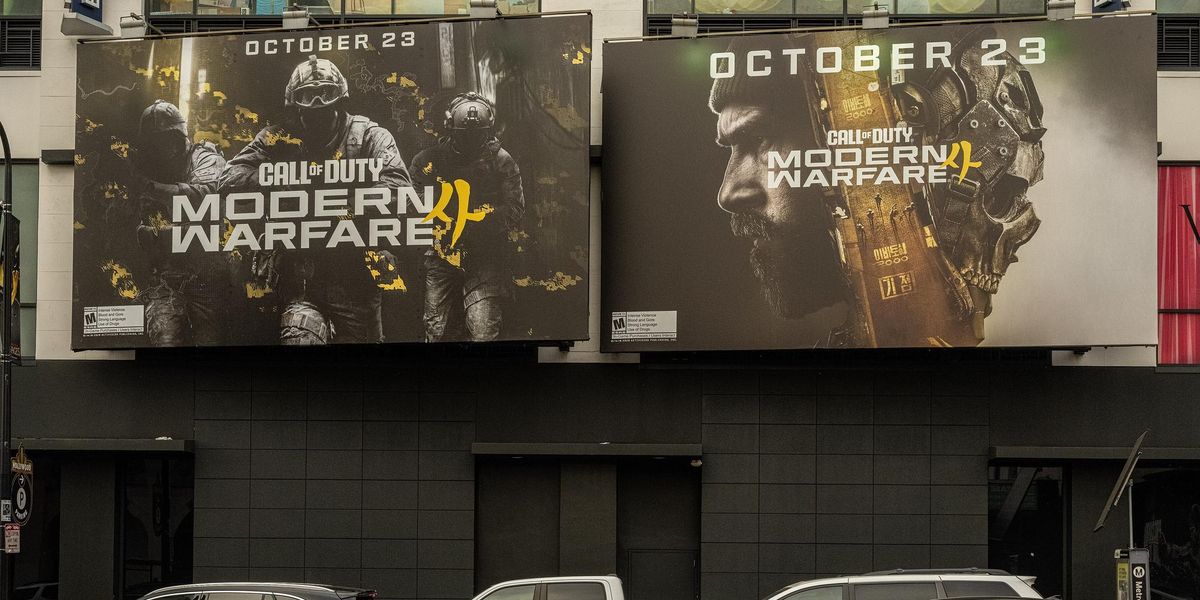
The good folks at Activision and Infinity Ward have outdone themselves this time. For more than two decades, Call of Duty has dominated the world of first-person shooter games, selling more than 500 million copies worldwide. What began in 2003 as a gripping, cinematic rendition of some of World War II's most heroic battles has gradually morphed into an immersive Beltway military fantasy in which millions of players experience the world of geopolitics through Washington's eyes, complete with its familiar enemies, justifications for military intervention, and warnings about the dangers of American withdrawal.
The latest installment of the saga, Modern Warfare 4, takes this formula to extraordinary lengths, plunging players into a world where North Korean brutality and Russian expansionism threaten global stability, while American military power remains the indispensable answer. Of course, this is nothing new to the series. In 2019's Modern Warfare, players encounter the aftermath of a Russian massacre along fictional Urzikstan's "Highway of Death," a warped inversion of the real-life slaughter of retreating Iraqi forces by the American-led coalition in 1991.
Throughout the series, players are constantly hunting down and executing political and military leaders with names that are sometimes a little too on the nose, from Khaled Al-Asad to Iranian Quds Force Major Hassan Zyani. In recent years, the fall release season has become something of an annual opportunity for Activision to show us what's next on the menu of the Beltway's voracious appetite for military confrontation. This year's offering is North Korea.
The campaign opens with players assuming the role of South Korean Private Park Hyun-Jun, enjoying a routine night out with his fellow Marines when the North Koreans launch an unprovoked, full-scale invasion of South Korea. The assault begins with a citywide blackout, followed by a devastating strike on a bustling civilian market that leaves soldiers and civilians dead. The story then rewinds five days, to a North Korea mourning the death of its longtime ruler who is replaced, after a palace coup, by his blood thirsty war criminal daughter.
The player, now acting as a North Korean soldier, meets the daughter in “Following Orders,” a brutal mission that again leaves little to the imagination. Searching for a defector, you and your comrades ravage a village, torturing North Korean civilians for having illegal MP3 players, novels, and heart medication. Then, once the sister has made you hang the defector, the whole village is executed en masse for harboring him.
Watching the gameplay of this mission, I was reminded of My Lai and Blackwater’s Nisour Square massacre. The game’s intended audience won’t be. Meanwhile, Russian ultranationalists, who are helping North Korea wage its war against the South, are also taking advantage of American military withdrawals from strategic positions around the Black Sea and the fictional state of Urzikstan.
American operatives are furious that Washington is abandoning the work they have accomplished abroad. When one questions why policymakers are undoing all their good work, another offers a simple explanation: "It's a flawed system,” the consequences of which are spelled out moments later: “Russia's taking ground. We withdraw, they move in." The flawed system, it seems, is the very democratic process that allows the American public and its elected representatives to question Washington's military commitments abroad.
As Americans increasingly reckon with the disastrous consequences of decades of interventionism and debate the wisdom of further military entanglements in Ukraine, Taiwan, and Iran , Activision offers a familiar Beltway warning: American restraint only emboldens our enemies. Roger Stahl, a professor at the University of Georgia who studies the military-entertainment complex, sees a familiar pattern in the franchise. "The enemies are - surprise! - the very same enemies that animate the narratives of official U.S. foreign policy," he told me, arguing that the franchise advances "a powerful narrative” that lets U.S. interventionism “off the hook." Toward the end of the campaign, players discover that American restraint almost brought all of Europe to the brink of catastrophe.
Once North Korea is liberated from the tyrannical Ri Ju-Young, whom you execute, you learn that the whole invasion was a Russian testing ground for an EMP device. The ultimate plan, orchestrated by Russian ultranationalists, was to use the same technology to conquer Europe, beginning with Ukraine and Poland and eventually reaching the United Kingdom. The game ends in a dramatic fight sequence where you murder a man who appears to be the Russian minister of defense.
Throughout the campaign, players are given freedom to make a bevy of choices: from which brand of ramen to buy at a Korean convenience store, to what ways and for how long they toy with North Korean civilians. Yet these choices have little bearing on the larger narrative of the game already laid out for the player. Matthew Alford, a scholar of the military-entertainment complex, succinctly described this illusion of choice : "The player has tactical freedom within a political framework they cannot question: how to fight is interactive; why we fight is settled in advance." Stahl wonders how Americans would react if the Russians or North Koreans developed an equally popular game in which players conduct covert operations to infiltrate Washington and assassinate the American president.
Would anyone dismiss that as just another video game? Activision has also enlisted MrBeast, YouTube’s most popular creator, to promote its latest military fantasy through a million dollar Call of Duty competition that has already attracted nearly 50 million views . The video-game spectacle concludes with contestants scrambling aboard a Chinook helicopter that takes off from the feet of an enormous statue bearing an eerie resemblance to current North Korean leader Kim Jong Un.
At a time when young men, this game's target audience, are beginning to question the legacy of America's disastrous foreign policy over the last two decades, this game feels painfully outdated. It offers a packaged fantasy of a world where American restraint invites catastrophe, Washington's enemies display irredeemable and insatiable evil, and U.S. military intervention is the only conceivable solution to curb said evil. Such a narrative, if left unexamined, could leave a player's energy recharged, his imagination captured, and his consent manufactured for America's next war by the time he puts down the controller.
Source: Responsible Statecraft