Wire · Gulf Edu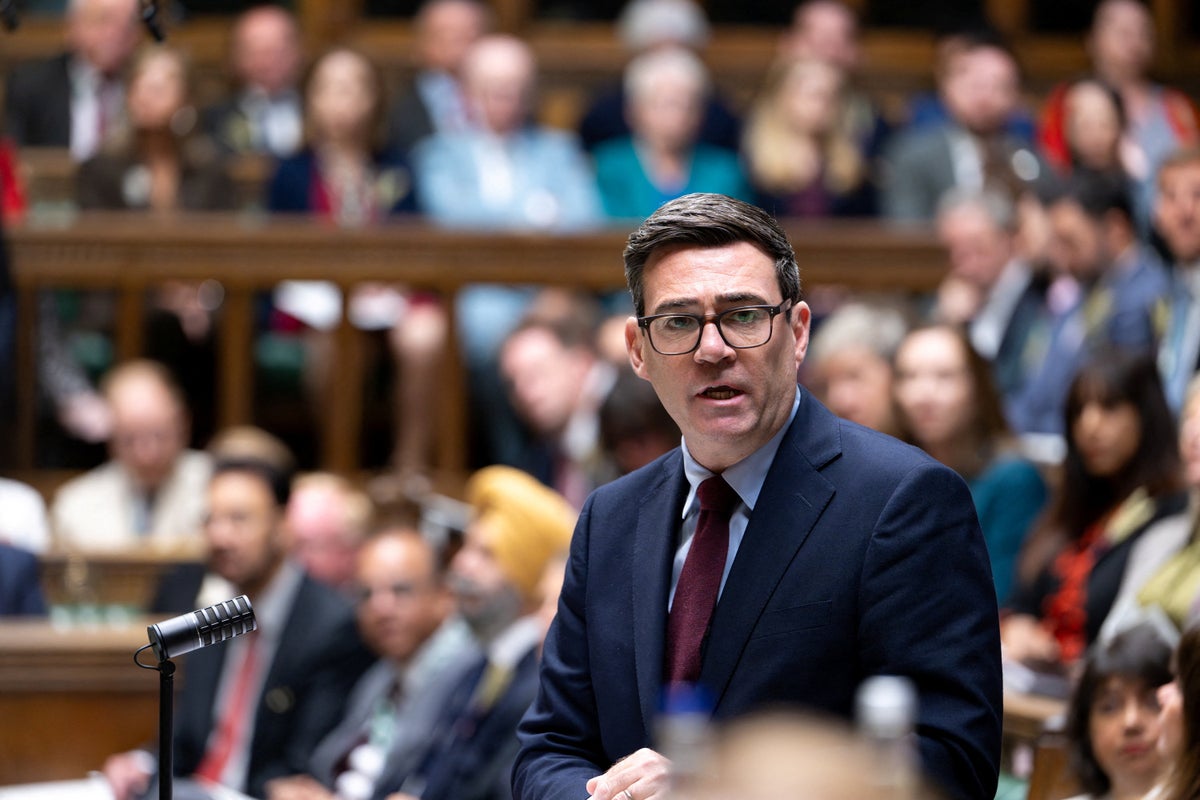
W ith one simple but profound sentence uttered at Prime Minister’s Questions, Andy Burnham has revealed a dangerous misunderstanding of the external threats that Britain faces. When he told the Commons this week that “We do everything to support our national security , but it can’t come at the expense of social security ”, Kemi Badenoch rightly looked appalled. Security is the first duty of government because everything else depends upon it.
Simply put, there is no welfare if we move to warfare. Such is the gravity of Burnham’s comment that I wondered if he’d accidentally said the quiet part out loud. It has exposed a fundamental misjudgement by his administration about the priority that defence now demands – and, perhaps most troublingly, an acceptance of Britain’s retreat from its traditional role on the international stage.
Step away from Burnham’s announcements about bus fares and homelessness, however commendable, and the picture is stark. Our world is becoming less globalised, less cooperative and less predictable, and more divided, confrontational and primed for conflict. The boundaries between peace and war are blurring.
The parallels with the late 1930s are uncomfortable. America is retreating from its role as guarantor of Western security. Russia and China are deepening their strategic partnership and widening their respective spheres of influence.
And Iran is fuelling instability across the Middle East. Our adversaries are already collaborating and testing us below the threshold of conventional warfare – through cyber-attacks, sabotage, disinformation, economic coercion and attacks on critical infrastructure. Yet Britain remains dangerously complacent.
The prime minister repeats his commitment to reach 3.5 per cent of GDP on defence by 2035, which sounds impressive – until you notice the date. Almost a decade away. How different will the world look by then?
The threat will not politely wait. Europe understands this. Nations are modernising their militaries, rebuilding industrial capacity and strengthening national resilience.
Some are again examining national service . Britain, meanwhile, sends households advice about storing water and non-perishable food for emergencies and considers how to mobilise strategic reserves. Yet the squeeze on the MoD budget means the Army is cutting back live-fire and combined-arms exercises to save money.
Of course, a civilised society must protect the vulnerable. But there is a fundamental truth missing, one our new chancellor, John Healey – a former defence secretary – should understand: that without security there is no economy; without an economy, there is no welfare state. Modern warfare is no longer simply about tanks, ships and aircraft.
The front line includes our power grid, satellites, undersea cables, banks, supply chains, hospitals and data. This week’s catastrophic air-traffic-control failure , not currently attributed to a cyber-attack, showed how disruption to one critical system can ripple across the country. The plight of Jaguar Land Rover illustrates the enormous economic consequences of a simple cyber-attack.
These vulnerabilities offer a glimpse of the deniable face of modern conflict – and Britain is woefully unprepared. At Prime Minister’s Questions, Andy Burnham said: “We do everything to support our national security, but it can’t come at the expense of social security” (Reuters) (Reuters) Now add artificial intelligence. Talk of superintelligent AI destroying humanity may still seem distant.
The more immediate danger is an adversary harnessing advanced AI, potentially alongside quantum computing, to launch game-changing cyber-attacks: simultaneously disabling banking, communications and electricity. More chillingly, imagine technology lowering the barriers to engineering a new biological agent while an adversary secretly develops the means to protect its own population. That is the complex battlefield for which we must prepare.
Britain needs more than increased defence spending. We need national resilience: stronger cyber defences, protected infrastructure, strategic reserves, serious civil contingency planning and credible air and missile defence. We should even have the confidence to debate national service.
For centuries, Britain has punched above its weight. Our hard power was reinforced by extraordinary soft power: diplomacy, intelligence, alliances, development and the quiet art of statecraft. Nations looked to Britain for security leadership.
But leadership without capability is rhetoric. Britain risks suffering a serious grey zone attack before this government finally acts. If Labour is to keep us safe, prosperous and influential, security cannot be another spending department competing for whatever remains after everything else is protected.
Tobias Ellwood is a former foreign minister, former chair of the House of Commons defence committee, and author of Ten Steps to Prevent World War Three (Bonnier Books)
Source: The Independent